| Share

Palm Court Arts Complex

Palm Court Arts Complex

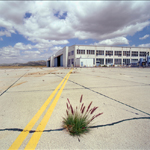
The Palm Court Arts Complex is home to the Great Park Gallery and the Great Park Artists Studios, housing a publicly-accessible artists-in-residence program. This new civic space also features Hangar 244, a 10,000 square foot event center; a shaded outdoor performance plaza enhanced by 54 Canary Islands date palms; and the Great Park’s first site-specific permanent public art installation.

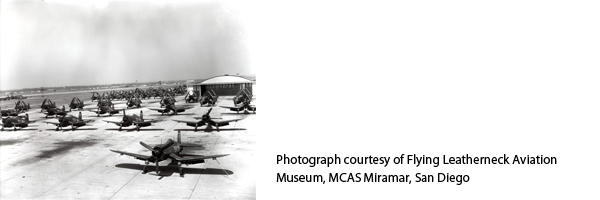
Visitors will discover that the Marine Corps Air Station El Toro’s World War II-era atmosphere and architecture have been preserved by means of adaptive reuse of existing buildings, a strategy that aligns with the Park’s ecological values. The Palm Court’s re-purposed military structures now form a cultural campus supporting the development of a fresh approach to establishing an interdisciplinary, public arts program.


You can see the following exhibits by visiting the Great Park Gallery during open hours:
Thursday-Friday: Noon-4:00 p.m.
Saturday-Sunday: 10:00 a.m.-4:00 p.m.


Deborah Aschheim: Involuntary Memories: Marine Corps Air Station El Toro and the Nixon Years

On exhibit April 27, 2013 – July 14, 2013

In the Orange County Great Park’s latest site-specific art exhibition, Deborah Aschheim: Involuntary Memories: Marine Corps Air Station El Toro and the Nixon Years, the reflected memories of a community spring to life as original drawings, sculptures, texts and films transform the Great Park Gallery into a walk-in community storybook.

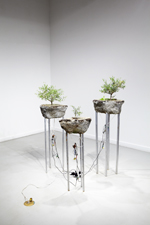
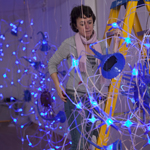
Guest curated by Meg Linton, this thought-provoking exhibition artfully showcases excerpts of interviews Aschheim conducted with Great Park visitors during her six-month residency at the Great Park from October 2011-March 2012.  The interview excerpts are displayed alongside dozens of Aschheim’s hand-drawn illustrations based on images from the Nixon years and two new sculptures. Aschheim created the illustrations and sculptures in response to stories shared by members of the community.

This vivid tapestry of art and community memory is accompanied by extensive excerpts from The Silent Majority: Super 8 Home Movies from the Nixon White House lensed by H.R. Haldeman, John Erlichman and Dwight Chapin, and preserved and compiled by Penny Lane and Brian Frye. The excerpts were recently screened in New York by the Film Society of Lincoln Center in collaboration with the Museum of Modern Art.

Artist and Exhibition Background

In late 2011, the Orange County Great Park invited Deborah Aschheim to be one of its first artists-in-residence at the newly opened Palm Court Arts Complex. During her residency, she used the Great Park Artists Studios as a project office and lab in which she conducted field research by speaking to Park visitors about their remembrances of the base, city, and county.

According to Henry Korn, Curator of the Great Park Gallery and Manager of Arts, Culture and Heritage for the Great Park at the time, “This community-centered project is intended to be about memory, history, and place, because the opening of the Palm Court Arts Complex marked the end of an era following the closing of Marine Corps Air Station El Toro.  Deborah Aschheim used her Great Park residency as a good opportunity to build upon her previous artwork about memory. To give her project a face and a time she focused on Richard Nixon and his relationship to Orange County and MCAS El Toro.”

Aschheim first became preoccupied by President Nixon at age nine when, according to Meg Linton, Guest Curator, “many young people become aware of civics and history and their political consciousness begins to form. When she was in the 4th grade,” reports Meg Linton, Deborah Aschheim was just beginning to know there was a world outside her family and the world switched – from being just her house, her street and her family – to her nation.  And suddenly, there was Watergate.”

During her residency at the Great Park in 2011-2012, Aschheim spent almost every Sunday in her “open” studio at the Palm Court Arts Complex working on drawings.  When a visitor entered her studio, they saw vintage photographs, reference books, and drawings of President Nixon, University of California, Irvine, and Marine Corps Air Station El Toro. When curious visitors engaged the artist in conversation, Aschheim asked if she could record a personal story explaining she was interested in memories only, not partisan politics.

After interviewing a particular Park visitor, Aschheim researched the specific event the person was referring to in order to find a corresponding historical image to draw.  Sometimes, Aschheim discovered discrepancies between what was described to her and what actually happened.  However that did not matter in this context because as Curator Meg Linton observes in her exhibition catalog essay, Aschheim was creating an art installation rather than a history exhibition, so the artist could focus on idiosyncratic, unreliable, distorted and creative aspects of memory and how they reveal individual and community identity.

Some Great Park visitors also shared stories about the City of Irvine prior to its incorporation; however that subject proved less attractive to talk about than a conflicted presidency and a controversial war.  It wasn’t until Aschheim went to the photo archives at the University of California, Irvine during her extended residency that she found visual clues defining a transitional moment for both a place and a community.

Aschheim sorted through vintage 35mm slides from the beginning of the construction of UC Irvine through 1974 when President Nixon resigned. According to the artist, the UC Irvine images included in her Great Park Gallery installation tell the core story of the Nixon years in another way because the new University, like the nation at large was poised at the moment between two realities – the utopian ideal represented by the futuristic modern architecture of the campus giving way to the Cold War era tension and student protest adding up to an Orange County “not boring or shielded from the politics of the 1960′s and early 1970′s but strangely reflective, engaged and now haunted by a utopian future that did not come to pass.”


Find out more by visiting our upcoming events page, signing up for email updates (on the right), or by following us on Facebook and Twitter.

The Artists Studios Hours:
Saturday-Sunday: 10:00am-4:00pm


Jennifer Backhaus

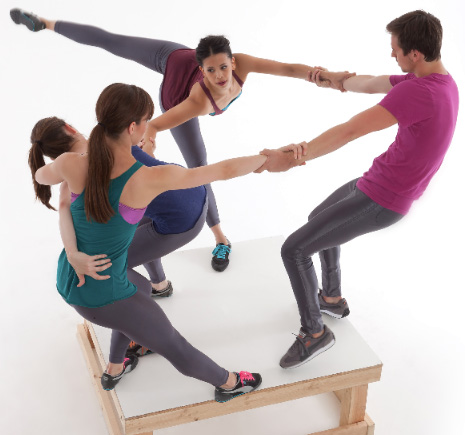
Jennifer Backhaus is the Founder and Artistic Director of Backhausdance, Orange County’s award winning contemporary dance company. Jennifer was included in OC Metro’s 40 Under 40 in 2009 and was honored by Chapman University as Alumni of the Year for her artistic success with Backhausdance. As a choreographer, Jennifer’s works have been commissioned and produced by the Los Angeles Ballet, Orange County Regional Ballet, the McCallum Theatre, Segerstrom Center for the Arts, Utah Regional Ballet, Chapman University, Mount San Antonio College, Santa Ana College, Impact Dance Theater, TDC of the Bay Area, Brigham Young University, among others.Many of Jennifer’s works have been honored by Regional Dance America and her piece Disintegration was selected for national performances with the American College Dance Festival at the Kennedy Center in Washington D.C. For Backhausdance she has created thirteen pieces, three of which (Sitting on January, Love and Other Impossibilities and Shift) have received multiple Lester Horton Awards for Outstanding Achievement in Choreography. At the McCallum Theatre’s Dance Under the Stars Choreography Festival, Jennifer has been the recipient of three consecutive choreography awards for her work with Backhausdance.

Jennifer is an instructor of dance at Chapman University where she teaches modern dance technique, dance improvisation and Introduction to Dance Studies. She is also a teaching artist for the Segerstrom Center for the Arts ArtsTeach Program where she shares her love for dance and choreography with local students in public and private schools across Southern California.

She recently completed her graduate studies through the prestigious Hollins Unversity/American Dance Festival program, earning her a Master of Fine Arts degree in Dance.

Note: Jennifer Backhaus will be in the studio on the following dates and times:
Thursday, December 6 10 a.m. – 1 p.m.
Thursday, December 20 10 a.m. – 1 p.m.
Thursday, December 29 10 a.m. – 1 p.m.

The Legacy Project
The Legacy Project
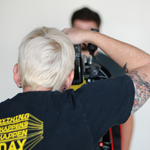
The Legacy Project is dedicated to documenting and interpreting the former Marine Corps Air Station at El Toro, simultaneously honoring the history of the site and celebrating its transformation into the Orange County Great Park. This group of six photographers, assisted by legions of students and friends, have created over 200,000 images of El Toro in addition to shooting several videos. Their most notable work is the world’s largest photograph, The Great Picture, a 32-by-111-foot image of El Toro created in a former F-18 hangar.
Photo: Detail from Nature Prevails ©Mark Chamberlain


Check out some of the Great Park’s past Artists-in-Residence:

AiRs

Andre Woodward - May - October 2012

Deborah Aschheim - November 2011 through May 2012

Amy Caterina - October 2011 through May 2012

Arts Happenings at the Great Park bring the community together to experience — and participate in — art in the Park. Programs are developed to cover a wide variety of media and interests, and include events developed in collaboration with Arts Orange County and our Artists-in-Residence.


2013 Chamber Music Series
Kevin Kwan Loucks, Artistic Director

Saturdays at 2:00 p.m.
Palm Court Arts Complex, Artists Studios
Admission and parking are free. Seating is limited – seat passes distributed at 1:30 p.m.

This lively series of immersive, informative and informal chamber concerts curated by Kevin Kwan Loucks features guest artists such as Ross Gasworth, Bill Kalinkos, Iryna Krechkovsky and Kimberly Patterson. Loucks served as Great Park artist in residence in 2011-12 and was praised by the Orange County Register for “exhilarating polish, unity, and engagement.” The Völser Zeitung (Italy) considers him “a shining talent” and La Presse, Montréal terms his musicianship “impeccable.”

Yamaha Piano provided courtesy of Yamaha Corporation of America

Programs

Saturday, January 26
French Impressions

Iryna Krechkovsky, violin
Kimberly Patterson, cello
Kevin Kwan Loucks, piano

Debussy (1862-1918)
Sonata for Violin and Piano in G minor, L. 140 (1917)

Franck (1822-1890)
Arranged by Jules Delsart
Sonata for Cello and Piano in A Major 1886

Maurice Ravel (1875-1937)
Piano Trio in A minor (1914)

From 1871 to the early 1900s, French composers began experimenting with instrumental sonorities through the power of suggestion and atmosphere – music that directly opposed the emotional excesses of the Romantic era. French Impressions features three masterpieces from the French chamber music repertoire: Claude Debussy’s final composition, the Sonata for Violin and Piano; Cesar Franck’s richly harmonic and cyclically structured Sonata for Cello and Piano; and Maurice Ravel’s exotic and highly virtuosic Trio for Violin, Cello, and Piano composed at the onset of World War I.

Saturday, February 23
All Brahms

The Krechkovsky/Loucks Duo
Iryna Krechkovsky, violin
Kevin Kwan Loucks, piano

Brahms (1833-1897)
Sonata for Violin and Piano No. 1 in G Major, Op. 78
Sonata for Violin and Piano No. 2 in A Major, Op. 100
Scherzo for Violin and Piano in C minor “Sonatensatz”
Sonata for Violin and Piano No. 3 in D minor, Op. 108

Johannes Brahms composed the three sonatas for violin and piano between 1878 and 1888. The Sonata in G Major is an astonishing “first” by any standard; it is a tender work full of lyricism and sacred repose. The A Major Sonata radiates intimacy and gentility, while the Scherzo movement (Sonatensatz) is driven by youthful energy. The powerful Sonata in D minor explores a more varied emotional landscape wrought with passion, urgency, and restlessness. This cycle of masterpieces occupy their own rarefied world of brilliant construction and exquisite beauty, qualities synonymous with all of Brahms’s music.

Saturday, March 30
Music for the End of Time

Trio Céleste with guest artist Bill Kalinkos
Bill Kalinkos, clarinet
Iryna Krechkovsky, violin
Ross Gasworh, cello
Kevin Kwan Loucks, piano

Shostakovich (1906-1975)
Piano Trio No. 2 in E minor, Op. 67 (1944)

Messiaen (1908-1922)
Quartet for the End of Time (1941)

Russian composer Dmitri Shostakovich and French composer Olivier Messiaen were both deeply affected by the tragedies of World War II. Shostakovich’s Piano Trio No. 2 was composed in the midst of the War, and like many of his works, seems to comment on the tenor of the times with eerie instrumental effects and a tortured “Dance of Death.” Messiaen’s Quartet for the End of Time contains some of the most ethereally beautiful music from the last century. It was first premiered on a freezing January night in 1941 at a prisoner-of-war camp in Görlitz, Germany where the composer was held captive. Messiaen wrote in the preface of the score that the work was inspired by a text from the Book of Revelations:

And I saw another mighty angel come down from heaven, clothed with a cloud: and a rainbow was upon his head, and his face was as it were the sun, and his feet as pillars of fire… and he set his right foot upon the sea, and his left foot on the earth… And the angel which I saw stand upon the sea and upon the earth lifted up his hand to heaven, and sware by him that liveth for ever and ever… that there should be time no longer: But in the days of the voice of the seventh angel, when he shall begin to sound, the mystery of God should be finished…

About Kevin Kwan Loucks
Kevin Kwan Loucks is a critically-acclaimed classical pianist who has performed in Weill Recital Hall at Carnegie Hall, Prösels Castle in Italy, the Kennedy Center, Lincoln Center’s Alice Tully Hall, Lichtenstein Palace in Prague and Aspen’s Harris Concert Hall where he was featured on National Public Radio’s Performance Today. A graduate of The Juilliard School in New York, Kevin is currently completing his Doctor of Musical Arts degree at Stony Brook University where he was teaching assistant to the Emerson String Quartet. He served as Artist-in-Residence at the Orange County Great Park and at UCI in 2012.


Need more info? Contact the Visitors Center at (866) 829-3829 (toll-free) or send an email.